
Transcript
Announcer:
You’re listening to On the Frontlines of Pediatric Vaccines on ReachMD. Here’s your host, Dr. Alexandria May.
Dr. May:
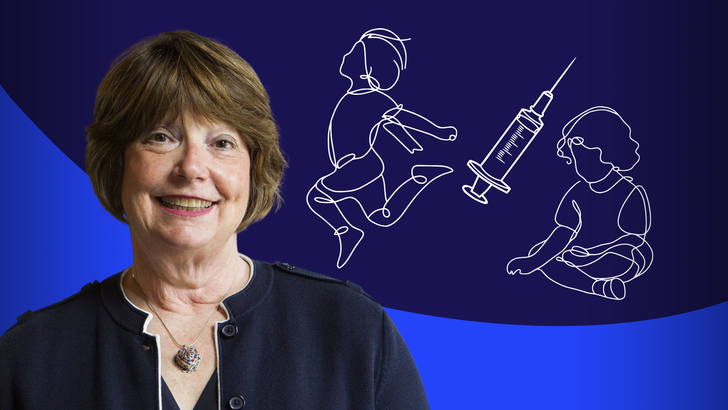
Welcome to On the Frontlines of Pediatric Vaccines on ReachMD. I'm Dr. Alexandria May, and joining me to discuss pediatric vaccination as a public health strategy is Dr. Ruth Carrico. Dr. Carrico is a family nurse practitioner in Louisville, Kentucky, and an Adjunct Professor with the University of Louisville School of Medicine. She's also the senior partner in Carrico and Ramirez PLLC, and has worked in the field of infectious diseases, clinical practice, and research for more than 35 years. Dr. Carrico, we're so glad to have you here today.
Dr. Carrico:
It is truly a delight to be here. Thank you for the opportunity.
Dr. May:
Well, Dr. Carrico, let's dive right in. You have a lot of experience in infectious disease prevention. From your perspective, where does pediatric vaccination fit within the larger ecosystem of preventing these diseases?
Dr. Carrico:
Well, I think as a parent and also a healthcare provider, I can look at this issue from both sides. And I think both sides want our children to be as healthy as possible and to identify opportunities to promote that health. So all of us, I think, have this shared goal.
Our challenge is oftentimes; how do we get there? And I think this really is where the rubber meets the road, and where we are all looking together to make sure that our kids can live healthy lives, so they can go to school, reach full potential, and become healthy adults.
And so preventing disease becomes, then, a primary pillar. How do we make sure the kids don't have to grapple with these diseases if we can provide some measure of prevention? And now prevention, we know, may not be preventing the disease itself from occurring, but instead preventing these worst outcomes: serious illness, hospitalization, and even death.
That's our goal. And vaccines are key and instrumental and of incredible importance and effectiveness.
Dr. May:
Now, when you look at pediatric vaccination today, what stands out to you as working well, and where do you see room for improvement?
Dr. Carrico:
Well, I think when we look at, overall, our vaccination rates for children, it's remained pretty high, certainly compared with the adult vaccination rates that are much lower. So we know that we're doing some things right. And I think that means our healthcare providers have that relationship with parents and with children that are making some of the vaccine decisions themselves—maybe later in adolescence and early adulthood—so we know that we are doing many of those things right and having discussions, talking about risk-benefit, and personalizing the message to children. I think those are the things that we are doing well.
I think our biggest challenge is that we are not doing well consistently across all aspects of the population. We have a number of health disparity issues that we really need to address. And that is in terms of whether or not healthcare providers are readily available to have those conversations and whether they feel comfortable having the conversations and maybe addressing some of the questions, pushback, or hesitance issues.
Also, are there places where the vaccines can be obtained or accessed? At the end of the day, our job is to make sure that we not only have vaccines, but we have vaccination. So that means we've gotta move the vaccine out of the refrigerators, out of the freezers, and get them to the people.
So we've got to make sure that, when we have vaccines and when we have providers' offices in the area, they're open, available, and accessible to the population at times and during the days that make it easy. We talk about, let's make it easy to do the right thing and hard to do the wrong thing. Well, if we're making it easy to do the right thing, then we've gotta be aggressive about those barriers and removing them so that every person has equal opportunity for the best practice and preventive care.
Dr. May:
And as a follow up to that, what factors do you think are driving these gaps?
Dr. Carrico:
I've learned in my length of time in healthcare—and I guess in life—the answer to all questions seems to be money, only the question's different. Right? And so how do we have funding that makes the accessibility accessible consistently?
And I think we learned a lot with COVID, in that we set up programs to make vaccines available. And then, once we were through those early aspects of the pandemic, we lost those additional efforts. So whether we had pop-up clinics or additional members to the workforce, once the perceived threat was over, then we lost that. So we did not build sustainable programs, and I think that's always our challenge. The things that look good and sound good are only good if they're going to be sustainable.
And any solutions we have can't be made to the community. It needs to be made with the community—so identifying what the community values and where we can get the prolonged access to resources. And it may not be money; it may be locations, people.
So we've got to make sure that we are including individuals in the community and we're finding out what groups and people value.
Dr. May:
Absolutely. For those just tuning in, you're listening to On the Frontlines of Pediatric Vaccines on ReachMD. I'm Dr. Alexandria May, and I'm speaking with Dr. Ruth Carrico about current challenges and opportunities in pediatric vaccination.
So, Dr. Carrico, let's shift gears now and talk about how we can address some of those issues. When we encounter parents who are uncertain or hesitant about vaccination, how can we approach those conversations in a way that's both effective and respectful?
Dr. Carrico:
Well, I think it always starts with listening, doesn't it? Many times, if I look back and try to categorize the questions or the comments that I hear most often, it's within, really, two major buckets. One of them is, will this vaccine help me or help my child? The other side is, will this vaccine hurt me or hurt my child?
So knowing that this is what we are hearing across the board, then we develop our strategy based upon that. And then, importantly, we go in and first—as I've mentioned previously—go to where the patient is. And that means we need to listen to them. So we ask questions of them and we let them know, today is a day that I want to talk about vaccines with you. Is it okay if I do this? Or, I have some information that I would love to share.
Most of the time, if I talk with a patient, one of my initial comments is, when we're together, you're the most important person in the world to me. I'm gonna turn my cell phone over. I'm gonna turn my back to the computer screen, or whatever, because it's all about you right now. So let's talk about you.
And then I focus on the issues that place that child or that individual at risk. Let's talk about that. Why are vaccines important for you? These are your health conditions. These are the medications. These are whatever is going on with them. These are the diseases for which we have some measure of prevention. This is how the disease would affect you. This is how the vaccine may help you.
And we start that conversation there, and then I listen. I put my hands down—I don't have a pen or anything else in my hands—and I look straight at them and I listen to them.
And I know, many times, that the patient may not feel comfortable telling me exactly why they're concerned. So they may use a reason that they have found works really well—for example, they may say, I don't take shots; I'm afraid of needles. Well, there's nothing we can do without a needle. Certainly, we can use intranasal flu vaccine, we can, but most of our vaccines now are going to be with injection. So if a patient says that, that may stop the conversation. But sometimes that's really not the reason. It's just the easy reason to give or something that may stop the conversation.
So I wanna go into a little bit more about that, and I wanna validate their reason. I say, yeah, I understand. It is certainly not fun to be stuck with the needle. I get it. So yes, it may be a stick, but let's talk about the benefit. So I’m validating their concern—I'm not saying that I agree with it, but I'm saying that I hear them and that I know that that's an issue—and then I provide additional information.
But now, as with everything, I look and I think back. Before COVID, if I talked with 10 patients, probably nine out of 10 would go with whatever the recommendation was that I would give them. One outta 10, I would have to spend a little bit more time. Now, it's like five and five. Five of them will automatically say yes. Of those five that say no, maybe for three of them, it's not a hard no, it's a soft no, if I give them a little bit more information.
So I've gotta understand my population. I've gotta be able to spend a little bit of time with them, and I've gotta realize that if we spend time together, the end result and the benefit is gonna be fabulous.
Then we go from there. And if they're at that point where they say, I am not interested today, then I accept that. I may not agree with it, but I accept that. But I always tell them—just like I'm gonna ask you every time you come in about medication reconciliation, or maybe, if you're a smoker, we're gonna talk about smoking cessation—I'm gonna remind you and give you updated information.
Then it's all about the patient, always. I listen to what they say, and I build on that each time. And I may not always be successful, but I'm not gonna give up.
Dr. May:
And in addition to that, what are some practical strategies clinicians or healthcare teams can implement to improve pediatric vaccination rates in everyday practice?
Dr. Carrico:
Well, again, those discussions, but also making sure everybody in the office is part of the conversation. I know when somebody comes into the office, they may see the person at the front desk first. They may see the medical assistant and spend more time with them than they do with any provider. So I've gotta make sure we're all in lockstep.
It's an important reminder that the people that are in your office, they're people too. Yes, they're healthcare workers, but you may have people in your office that have the same concerns that your patients have. And so it's important to know that.
So let's talk about this. Let's have a conversation. Let's find out where people stand, because hesitance can be conveyed through body language, can't it? So somebody may be saying one thing, but their body language says something completely different. So I need to make sure that we're all aware, that we have an opportunity for questions to be answered, and that we're also sharing the common comments that others hear that I may not hear.
So I've gotta make sure our whole process works.
Another aspect within a community is, who are those important partners? For example, the school systems. We have a school nurse in every school, so that we have these trusted individuals in schools. Let's not look at them as competitors to practice, but as partners. And so what is it that they need? Do they have access to our immunization information systems?
Again, it's remembering that immunization is a team sport, right? It's not an individual thing. It's a team sport.
Dr. May:
Finally, Dr. Carrico, as we look ahead, what opportunities do you see to strengthen the role of pediatric vaccination within broader, system-level infection prevention efforts?
Dr. Carrico:
I served on one of the CDC advisory boards, the HICPAC, which was the Healthcare Infection Control Practices Advisory Committee. And we had liaisons to HICPAC, and their job was to take back the information to their constituent groups and then figure out how we’re going to make this work.
Well, I think that with many of the changes in the ACIP, what I'm seeing as a positive outcome is the growing strength of our professional associations, like the AAP, ACOG, and AAFP. It seems to me the engagement and outrage on both sides—both to and from the membership—has increased.
So it’s the credibility and importance of these groups in getting information out. Say, for example, the AAP—we're looking at pediatric patients, so how do we make sure that our pediatric patients receive the vaccines that are right for them? Because we know part of immunization is right patient, right vaccine, right time, and under the right circumstances. We have all those “rights” that need to occur. So now we're having conversations between groups where everybody is kind of on the same page.
And I hear this repeatedly; patients say, I've heard about the guidelines, but I'm not concerned about what happens to a bunch of people. I wanna know how that affects me. So our conversations with our professional associations and societies, I think, are helping us have those conversations, so that on an individual basis, that patient knows that we're talking about the N of one. We're talking about you and why this vaccine or these vaccines are important for you.
Dr. May:
With those important insights in mind, I want to thank my guest, Dr. Ruth Carrico, for joining me to discuss how pediatric vaccination supports a larger picture of infection prevention. Dr. Carrico, it was great having you on the program.
Dr. Carrico:
Thanks so much. It was a wonderful opportunity to be able to stress the importance of vaccination, its critical nature, and the number of lives that are saved by these preventive approaches.
Announcer:
You’ve been listening to On the Frontlines of Pediatric Vaccines on ReachMD. To access this and other episodes in our series, visit On the Frontlines of Pediatric Vaccines on ReachMD.com, where you can Be Part of the Knowledge.
